
Independent connections for capacity and resilient failover.
References · Event WiFi
Event WiFi references from Sursee and Wald ZH.
Temporary infrastructure is never one-size-fits-all. Our references show how event networks adapt to the occasion, site, visitor numbers and operational needs.
Discuss a similar project ↗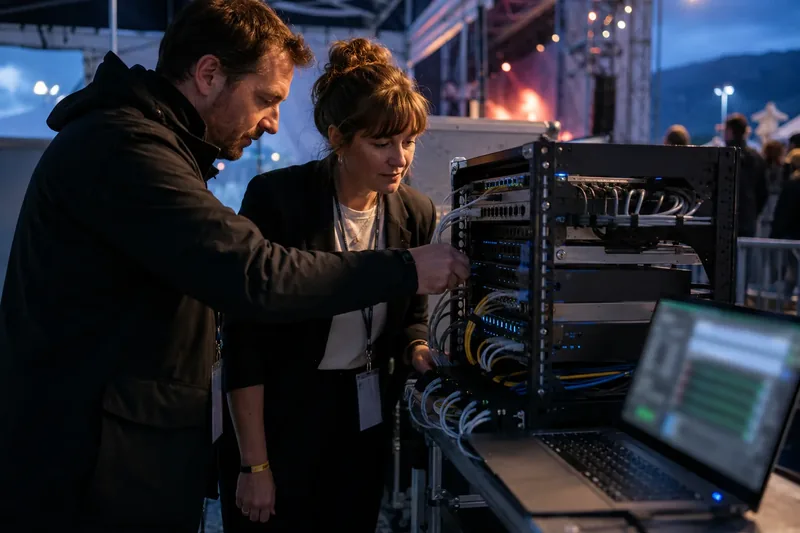

SMV-CSS Sursee 2026.
A powerful, resilient infrastructure for almost 9,000 visitors is being delivered for the Swiss club gymnastics championships.
Central gateways for routing, security and controlled network separation.
Structured distribution for access points and wired systems.
Purposefully placed radio cells for the expected coverage and device density.
Almost 9,000 visitorsSized for a high number of simultaneous connections across the event site.Visit the SMV-CSS website ↗

150 years of Harmoniemusik Wald.
For the Harmoniemusik Wald anniversary weekend, novoSYS provided temporary WiFi and network infrastructure supporting the organisers, operational workflows and use across the event site.
Temporary WiFi and network infrastructure for the anniversary weekend—planned for the organisers, operational workflows and use across the event site.
Planning, installation and operation were tailored to the event’s temporary nature—with short setup times and infrastructure that had to remain reliable throughout.
The structure, tests, responsibilities and monitoring were determined before entry.
What both projects share
An event network must fit the occasion.
Fast Internet access is of little help if switching or radio cells become a bottleneck. Each level had to fit the expected use.
Guest traffic and operational systems received different networks, rules and priorities.
The structure, tests, responsibilities and monitoring were determined before entry.
Next step
Tell us briefly about your event.
Location, date, areas and expected visitor numbers are enough for an initial assessment.