
1. Requirements
Location, schedule, areas, number of visitors, applications and critical systems are clarified.
We accompany the event network as a clear process: understand requirements, plan infrastructure, test on site and reliably support operations.
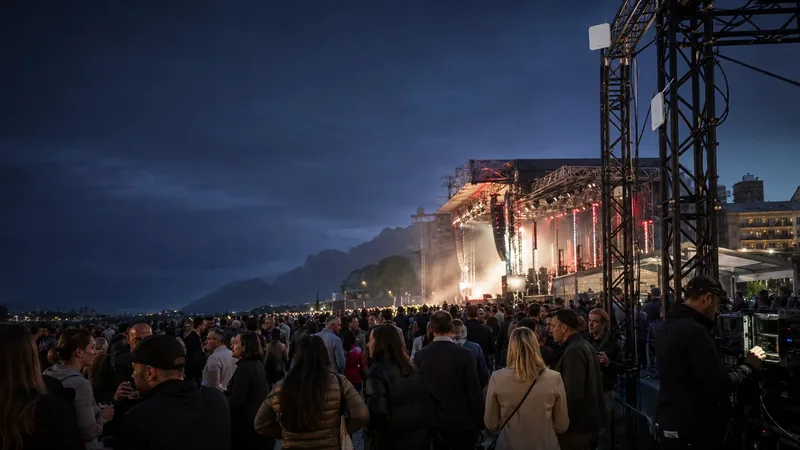
An event has fixed dates. That's why it's not enough to draw good architecture. Devices, cables, assembly, electricity, access and tests must be organized in good time. We structure this work into comprehensible steps and coordinate the handovers with location, production and other partners.
The depth of the project depends on the risk. A small company event requires a different process than a multi-day festival or a trade fair with numerous exhibitors. Together we define what needs to be planned, documented and monitored during operation.
Every building block is adapted to the venue, schedule and risk profile.
Location, schedule, areas, number of visitors, applications and critical systems are clarified.
Uplinks, firewalls, switching, radio cells, networks, power and assembly are dimensioned.
Configuration and installation are checked with real access and devices before entry.
Utilization and radio quality are monitored; Support and escalation are defined.
A technical inspection should show more than green status indicators. We check the intended networks, access rules and internet routes. If possible, cash registers, scanners or production devices are tested in the actual process. Open issues are recorded before guests arrive.
After the event, the temporary infrastructure will be neatly dismantled. For recurring events, configuration, plans and findings can be prepared for the next event. This makes the network easier to plan for every occasion.
For large or extensive events, as early as possible in production planning. Smaller events can often be implemented at short notice as long as the lines and installation are clarified.
Not always. Good plans and information can be enough. An inspection makes sense for complex buildings, outdoor areas or unclear assembly points.
Depending on the project, we document network structure, access, device positions and the relevant handovers for operation or repetition.
Location, date, areas and expected visitor numbers are enough for an initial assessment.